Why Multi-Carrier Tracking is Outdated, and What Smart Logistics Teams Use Instead
Your operations desk is already alive with clicks, ten browser tabs open: Maersk, MSC, ONE, Hapag-Lloyd, CMA CGM, COSCO, and a few air portals on the side. Someone’s trying to find whether a container cleared Port Klang while another waits for a flight update from Doha.
Half the team is chasing the same information, in different places.
That’s the reality for most freight forwarders and shippers today.
Multi-carrier tracking made sense when trade lanes were simple and volumes were predictable. But in 2025, with transshipments, schedule changes, and port congestion happening by the hour, hopping from one carrier website to another isn’t “visibility.” It’s lost time.
The logistics world has outgrown the tab-by-tab approach.
Today’s operations demand clarity, speed, and prediction, not just status codes. So, let’s explore how logistics teams can modernize shipment tracking, without juggling multiple carrier websites every single day.
Why Multi-Carrier Tracking No Longer Works?
Relying on carrier websites looks easy until you add up what’s really missing.
1. Delayed updates.
Most carrier portals refresh data every few hours. But a vessel may have already skipped a transshipment or changed rotation before your team even sees it.
2. Inconsistent formats.
Every carrier speaks a different digital language, milestones, status codes, time zones. You spend more time interpreting data than using it.
3. Lack of context.
A simple “vessel departed” means nothing without knowing congestion ahead or ETA impact. You see movement, but not meaning.
Across hundreds of containers, these small inefficiencies multiply into days of wasted effort, missed connections, and frustrated customers.
You’re tracking activity, not progress.
The Real Issue: Fragmented Visibility Creates Blind Spots
When your data lives in separate carrier systems, the gaps start to show.
You miss early signals of delays, rollovers go unnoticed, and customer service learns about problems after the fact.
Warehouse teams prepare for containers that haven’t even left origin. Airfreight teams book transfers for shipments still waiting at transit hubs.
Fragmented visibility doesn’t just slow operations, it weakens decision-making.
True logistics visibility isn’t about where the cargo was. It’s about where it’s heading, what could disrupt it, and what to do next.
That’s where smart logistics teams are changing course.
What Smart Logistics Teams Use Instead
Modern supply-chain professionals are leaving multi-carrier tracking behind.
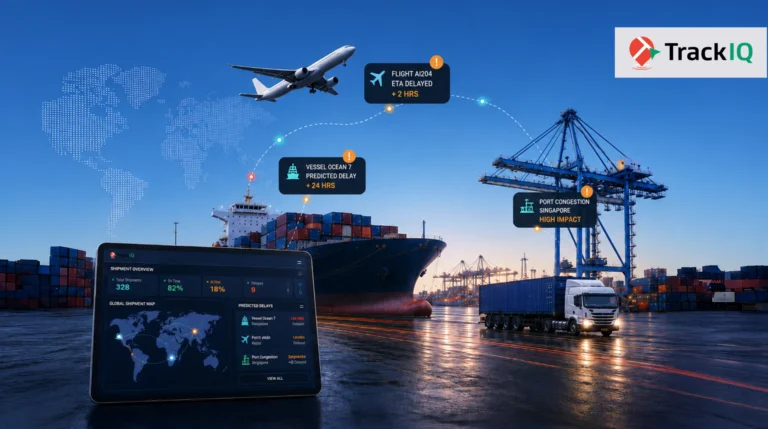
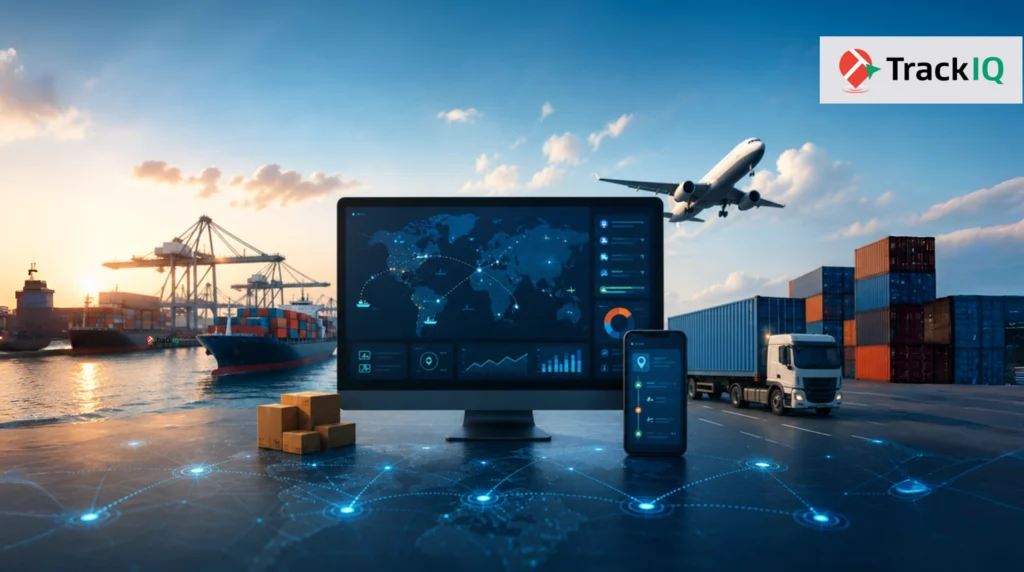
They’re adopting unified visibility platforms, one dashboard that brings together ocean, air, and port data into a single, consistent source of truth.
With a unified system:
- Teams track every shipment, regardless of carrier or mode, from one screen.
- Updates flow directly from carriers, ports, and airlines through live API feeds.
- Predictive alerts flag possible disruptions before they escalate.
- Managers get dashboards that highlight exceptions, not pages of raw data.
Instead of reacting to what just happened, they prepare for what’s about to.
That shift, from reactive to predictive, is what defines the new era of logistics visibility.
How Track IQ Replaces Multi-Carrier Tracking
Track IQ was built for logistics teams tired of chasing data.
It consolidates every major carrier, airline, and port feed into one connected platform designed around three simple goals: clarity, accuracy, and foresight.
Live Container Tracking
All ocean shipments are monitored in real time across carriers. Voyage changes, port calls, and terminal updates appear instantly, no tab-switching required.
Air Freight Tracking
Every airway bill is traceable through integrated flight data. You’ll know when cargo departs, lands, or gets split mid-journey, automatically.
Predictive ETA Engine
Track IQ doesn’t just show where cargo is; it predicts where it’s going.
By combining schedule history, congestion patterns, and weather data, it delivers ETA accuracy that carrier sites alone can’t match.
Automated Exception Alerts
If a container misses a transshipment or an air leg is rescheduled, your team gets notified instantly, before your customer calls asking questions.
Everything sits inside a clean, unified dashboard that connects with your ERP or TMS.
The result? One platform. Every carrier. Real clarity.
A Real-World Example
A freight forwarder managing over 300 containers and 50 air shipments each month used to dedicate two full-time staff to manual tracking.
Each morning, they spent hours checking carrier portals, updating spreadsheets, and emailing branches.
After switching to Track IQ, the team reduced manual tracking work by 80 percent and began identifying schedule disruptions nearly 48 hours earlier.
Instead of apologizing for late arrivals, they started informing clients before issues happened.
That’s the difference between tracking shipments and managing logistics.
Why It’s Time to Move Beyond Multi-Carrier Tracking
Upgrading your visibility isn’t about chasing new technology, it’s about changing how your operations think.
- From reactive to proactive.
- From fragmented to connected.
- From uncertain to predictable.
In an environment where one missed connection can affect an entire trade lane, foresight isn’t optional anymore, it’s survival.
The logistics teams that win tomorrow are the ones that can see ahead today.
Conclusion: Visibility That Keeps Up With the Real World
Every logistics professional knows that time isn’t lost in big moments, it’s lost in the small ones. The extra five minutes spent refreshing a carrier site. The tenth email asking for an ETA update. The one delay that no one saw coming because the data was buried somewhere else.
Multi-carrier tracking isn’t broken, it’s just outdated. It belongs to a time when visibility meant knowing where a shipment was, not what’s likely to happen next.
Today, visibility needs to think as fast as the supply chain moves. That’s what Track IQ is built for to turn scattered carrier updates into one connected view, to predict disruptions before they land, and to give logistics teams control instead of chaos.
You’ve spent years building reliable supply chains. Now it’s time for your visibility to catch up.
Stop juggling tabs, stop reacting to problems, and start running operations that stay two steps ahead.